
High Strength. Lower Carbon.
Low-Carbon Cement
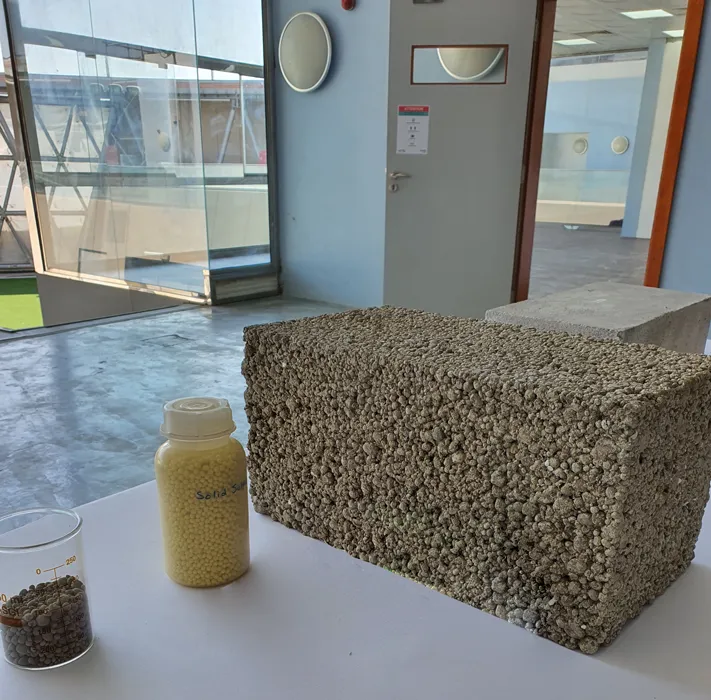
Building on more than seven years of applied research and pilot-scale validation, GORD’s green cement offers a novel low-carbon alternative that utilizes existing cement production infrastructure. By replacing conventional fossil-fuel-based heating with sulfur burning, this process not only cuts fuel consumption and limestone requirements but also significantly reduces the overall carbon footprint of cement production. The result is a high-performance, economically viable material that meets — and exceeds — the strength and durability standards of traditional Portland cement.
Turning Emissions into Materials
Carbonate-Based Plaster
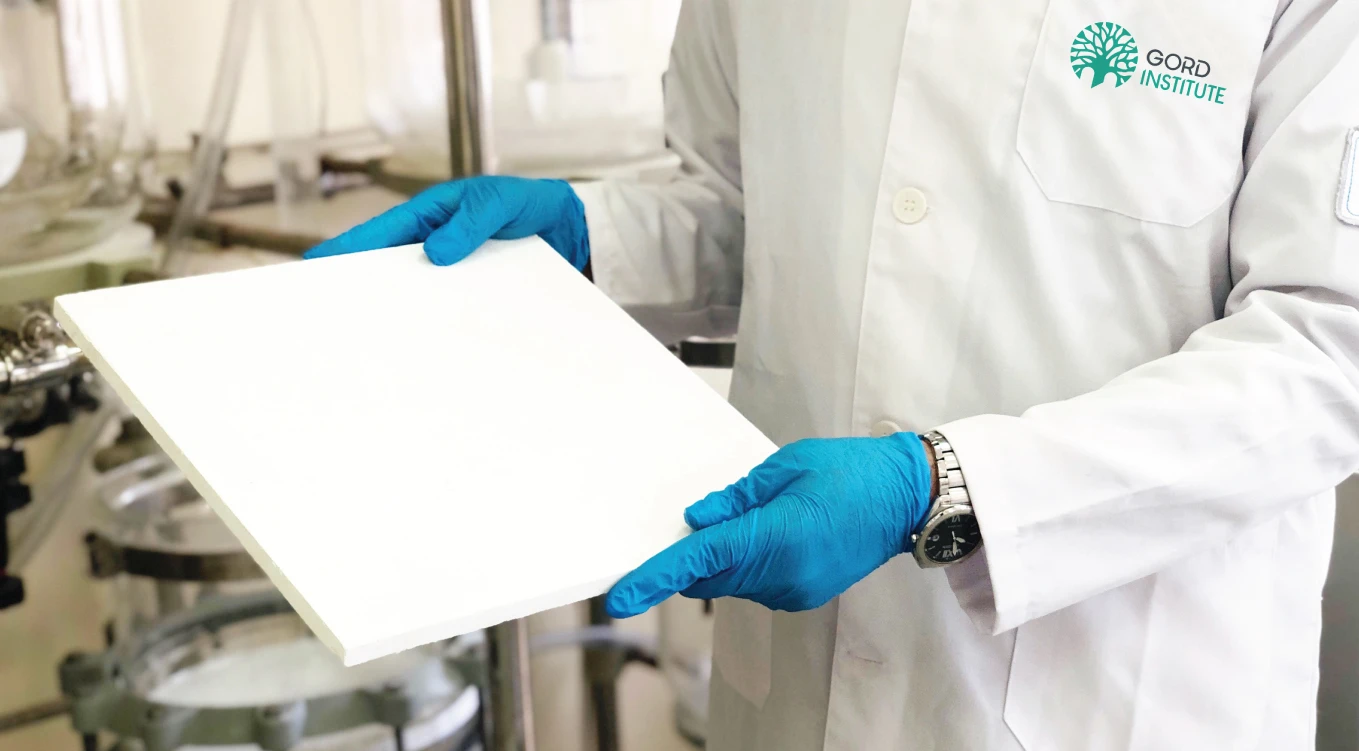
GORD has successfully developed a plaster-like material composed of more than 30% captured CO₂ sourced directly from industrial flue gases — without requiring prior gas separation. This innovative process transforms waste emissions and locally available resources into high-value construction materials, exemplifying the principles of the circular economy and climate change mitigation.
By reacting CO₂ with magnesium and calcium extracted from Qatari desalination brines, GORD’s research team has created a white carbonate powder that can be thermally treated and molded into durable products similar in performance to commercial plaster and plasterboard. The process — currently being optimized at GORD’s TechnoHub — is designed to be low-cost, scalable, and adaptable to various sources of CO₂ and mineral inputs, from formation waters and production brines to seawater.
Beyond offering a sustainable alternative to imported building materials, this technology provides a new pathway for carbon capture and utilization (CCU) that converts industrial emissions into market-ready products. It demonstrates how science-led innovation can bridge environmental responsibility with economic opportunity — turning waste into a tangible solution for a low-carbon future.